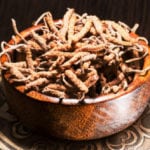
This is a list of phrases we are all familiar with and most likely use from time to time. The origins of these phrases are often unexpected and strange. As you will see on this list, some of them originate in places you simply wouldn’t believe. If you know of any others be sure to share them in the comments. The source for this list was The Book of Beginnings (out of print).

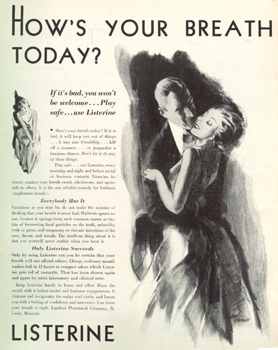
This phrase, surprisingly, was used to sell Listerine mouthwash! To promote their product, the manufacturers of Listerine employed the personal experience of girls at the time, who desperately wanted to settle down but seemed always to be left on the shelf. First used in the 1920’s, it portrays a situation and a possible explanation for the lack of success these girls had. Here is the transcript of the ad:
Poor Edna was getting on for thirty and most of her girlfriends were either already married, or about to tie the knot. How she wished that, instead of being their bridesmaid, she could be the bride! However, any romance of hers invariably ended quickly. There was a reason. Unbeknownst to her, she suffered from bad breath and no one would tell her, not ever her closest friends. The advertisement sold millions of bottles of mouthwash and also gave the English language a new saying!

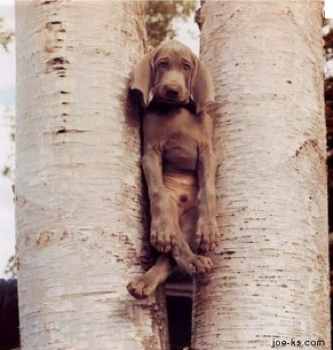
Originating back when hunting was still a major sport, this phrase came from when animals were used to track, catch or retrieve prey. This applies, not least, to dogs. Dogs were used in the chasing of raccoons, which was chiefly undertaken at night and were trained to indicate the tree in which the animal had taken refuge by barking at it. Of course, even dogs can err and, at times, barked up the wrong tree.

A pleasant relationship with other people, not least those in a superior position, is portrayed as being ‘on a good footing’ with them. There are two thoughts as to where this saying came from. Some say the phrase goes back to a practice of early apprenticeships. It was the custom, on the first day at work, for apprentices to invite all their workmates for drinks. The new apprentice ‘footed the bill’. If proved a generous host, he made friends for keeps. The hospitality would never be forgotten. Recalling how much it had cost, it was said the novice gained ‘a good footing’. A second derivation links the phrase with an early and bizarre interpretation of human anatomy, the importance given to the length of one of a person’s digits. At one time, the dimension of the middle toes determined a person’s ‘standing’ in the community. Thus, the measurement of their foot decided their status in the eyes of others. Those whom nature and genes had endowed with large feet were lucky to be ‘on a good footing’. Draw your own conclusions on this one!

Someone who doesn’t get to the point is said to ‘beat around the bush’. The origin of this phrase is, undoubtedly, from hunting, and more specifically from the hunting of boars. A ferocious animal, it often hid in the undergrowth and beaters were employed and ordered to go straight in to chase it out. But very much aware, and afraid, of the animals’ sharp tusks, they much preferred to merely ‘beat around the bush’ a practice strongly disapproved of by their masters.

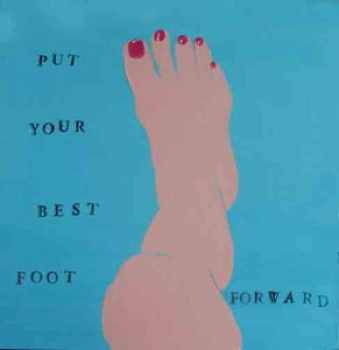
When you are trying to make a good impression it is said that you should put your ‘best foot forward’. There are many options as to where this phrase came from, one being that it was believed that ‘the left’ was the realm of the devil, of evil and misfortune. After all the Latin word sinister means left, and in English sinister has kept its ominous meaning. Hence, it was advisable to keep the left foot behind and step forward with the best, the right, foot first.
But this phrase seems to have come from the fashion world, rather than the occult. The saying can be traced to male vanity, particularly apparent in the late eighteenth century, the period of the dandy. His desire to attract people’s attention and admiration took strange and elaborate forms. At the time, people imagined that their two legs differed in shape and that ‘normally’ one was more becoming than the other. To draw attention to it they kept the worse one in the background, literally putting ‘their best foot forward’, and with it, of course, their leg.

A person who ‘bites the bullet’, without any sign of fear, acts with great courage in the face of adversity. The phrase recollects a dangerous army practice in the 1850s. Soldiers were then equipped with the British Enfield rifle. Prior to using it, they had to bite off the head of the cartridge to expose the explosive to the spark which would ignite it. The procedure was fraught with danger, particularly so in the heat of battle. It needed firmness and courage, as even the slightest deviation or hesitation would endanger the soldier.

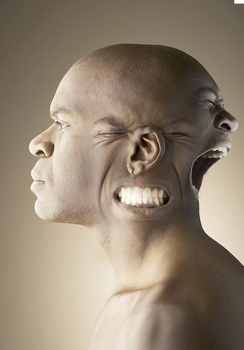
People who waver in their opinions and quickly change from being enthusiastic to showing disinterest are said to ‘blow hot and cold’. The saying can be traced to one of Aesop’s Fables. It was a cold winter’s day, and the freezing traveler was blowing on his stiff fingers. Mystified, a satyr wanted to know what he was doing. The man explained to him that, with his breath, he was warming his chilled fingers. Taking pity on him, the satyr invited the man to his home for a hot meal. This time, he watched him blowing on the food, which intrigued him all the more. Inquiring why he did so, his guest explained that he was blowing on the stew to cool it down. There and then the satyr told the traveler to leave at once. He was not prepared to entertain, or even mix with, someone who could ‘blow hot and cold from the same mouth’.

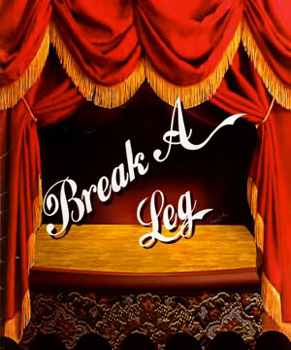
To wish an actor prior to his going on stage to ‘break a leg’ is a well-known practice. A pretty strange wish, actually it is meant magically to bring him luck and make sure that his performance will be a success. From the superstitious age it was thought that jealous forces, always present, are only too anxious to spoil any venture. A good luck wish would alert and provoke them to do their evil work, whilst a curse will make them turn their attention elsewhere. The underlying principle is the belief that if you wish evil, then good will come. I’m sure it’s called reverse psychology these days.

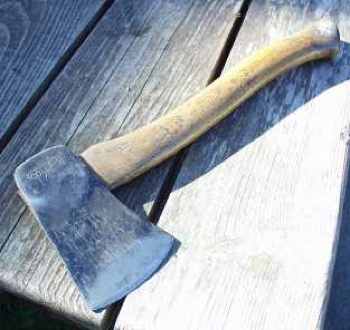
To bury the hatchet means to create peace. With hostilities at an end, the hatchet was no longer needed, and therefore could be disposed of. Now a merely figurative expression, the phrase is based on an actual practice of North American Indians. When negotiating peace, they buried all their weapons; their tomahawks, scalping knives and clubs. Apart from showing their good faith, simultaneously it made it impossible for them to go on fighting.

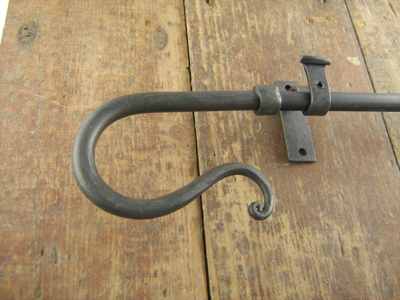
The achievement of a goal with determination, by fair means or foul, is described as getting things done ‘by hook or by crook’. The origin of this phrase is linked with an early British practice, at a time when forests were still the exclusive property of royalty. For any unauthorized commoner, then, to gather firewood in them was a crime, poor people being the only exception. Though they were not permitted to cut or saw off branches, they were free to remove withered timber from the ground or even a tree, doing so by means of either a hook or a crook.


i learned a few of them from this list. most were pretty obvious though.
The definition I heard is that to Break a leg…is to “bend” a leg – as in taking a bow. Picture the classic scene of an actor who is receiving adulation goes into a full bow with one foot forward and bent… that’s why it’s a good luck saying.
A song "Why am I always the bridesmaid, Never the blushing bride?" dates from 1917.
Yes, the expression definitely predates the 1920s. The saying “Three times a bridesmaid, never a bride” appears in a famous scene in Anne of the Island by L.M. Montomery circa 1915 and it is spoken as if it’s a familiar saying.
i thought biting the bullet had to do something with surgeries in the pre-anasthetic period. something new i learnt.
You're right. See my comment, about # 158.
It would be interesting to see a list like this in 300 years and see if they get the origins of our current pop phrases correct.
never heard of those except nb 2
BTW I AM SECOND!!!
But you'll always be first in the idiot department to me, brock!
I have come to the conclusion that brock is not the idiot that we think he is. After all, would an idiot know how to turn on a computer and log on to a website? I don't think so! But, maybe he is an idiot. Or a troll. Either way, he's still an idiot.
I think it's more a case of lonlieness than idiocy. This is probably the most attention Brock gets in his life.
"I have come to the conclusion that brock is not the idiot that we think he is. After all, would an idiot know how to turn on a computer and log on to a website? I don't think so! But, maybe he is an idiot. Or a troll. Either way, he's still an idiot."
So, to summarize,
you think that Brock isn't an idiot, but might be, but either way, he's an idiot.
Are you sure you're talking about Brock?
I believe he said he's not the 'idiot that we think he is'. His idiocy is never in doubt, only the type.
Yes, my dear sir, I am talking about brock. You see, brock is what we call a paradox. He might be an idiot, or he might be a troll, which still makes him an idiot. Therefore, either way, he is an idiot.
I went to "Wiki", a source I try to avoid if at all possible, to check the definition of idiot. Here is what I found:
An idiot, dolt, or dullard is a mentally deficient person, or someone who acts in a self-defeating or significantly counterproductive way. More humorous synonyms of the term include addlehead, blockhead, bonehead, deadhead, dimwit, dodo, dope, dummy, dunderhead, nincompoop, ninny, nitwit, numbskull, stupidhead, thickhead, and twit, among many others.
Sounds like brock to me, vonhohenzollern, I think you've got it!
you had me at dullard
Suddenly listverse has started posting new and quite different lists… Yesterday were shoes… Now origins of famous sayings… nice list…
well, i would prefer stating 'MACBETH" instead of "Break a Leg". But thats just me…
good point, astraya ! and thanks for resisting the 'first' comment…
cheers
Great list blogball
"blogball"?
Moonbeam
Bucketheadrocks
Oh, sorry.. I though we were saying names
@bucketheadrocks: bucketheadrocks
Ps: here you go dude
Here's one of my all time favorite names: Tarquin Fintimlinbinwhinbimlim Bus Stop F'tang F'tang Ole Biscuit-Barrel
Awesome list. I reckon this one needs multiple follow-up lisys.
i once saw a documentary on the history channel about army surgeons having their patients bite on a musket ball while they worked on them. i thought for sure that would be where "bite the bullet" came from.
I was certain of the same origin for "bite the bullet", but this one makes more sense in context.
Well i only knew the story of the enfield rifle that allegedly used cartridges with pig or beef fat. A no no for muslims and hindus. So it may have been one of the causes of the indian mutiny of 1857. The problem is that they bit a cartridge not a bullet. Wikipedia says its Kipling that coined this expression with the medical source.
I dont think it was very dangerous to bite the cartridge though. It couldnt spark the gun powder and soldiers got used to bitting the cartridge, “second nature” to paraphrase wiki.
yeh ive never really heard anyone else describe the bitting open of the cartridges as 'very dangerous'…all ive read is that the Saltpeter in the gunpowder dried the mouths and hands of the British soldiers and cause great discomfort overf long periods of frequent reloading
i believe this covers, what you thought — i think
also, it gives an explaination similiar to the list-writers
an interesting wrie up
http://www.phrases.org.uk/meanings/bite-the-bulle…
I saw that as well, When I think of the powder I think of the revolutionary war… I wonder if it's a remnant of both!
i always thought the term 'bite the bullet' wasn't something dangerous, completing a task that was hard work, paintful etc.
'i know this is going to be tough, but lets just bite the bullet and get it done'
I think you and your "repliers" are essentially correct. See my comment at #158 (I think).
Ha, those listerine guys sure hit the money with that one. No man would want to marry a woman with bad breath! If her breath stinks you can only imagine what else shes not taking care of…
Funny, but the logic behind that is, often a bad tooth wold be the cause of bad breath not necessiarily lack of care. Floride wasn't in the water system then as it is now, and I could see cavities being more prevalent.
This is cool. I always like these kinds of lists with trivia on word origins. Do another!
Funny, I know all of these phrases except for number one and yet I have only used “Barking up the wrong tree”!!
Nice to know what they really mean though
Did you know that "Shooting the messenger," comes from Genghis Khan?
The movie "Blood Simple" has a great reference to that, when Marty, after finding out his wife is cheating on him, tells the PI that shared the news that it's common in Greece to kill the messenger upon hearing bad news.
A leg in theatre is one of the curtains at the side of the stage. Break a leg refers to having so many curtain calls that the curtain in question breaks. Sorry to burst your bubble.
The explanation I've heard since I was small is the one included in the list, and I grew up in the theatre.
good point, astraya ! and thanks for resisting the 'first' comment…
Does anyone know the story behind the phrase:
Many a slip betwixt (between) the cup&the lip
Thanks! Always wanted to know…
In vino veritas
after reading this list, i'm not willing to say i know *the* story about anything, as there are differing origins for a lot, especially given translation error with some. i do, however, know *a* story.
its an old proverb — and was given new life, in a new form, through baseball and basketball. this phrase (not the original, but rather the fat lady singing) is often incorrectly credited to yogi berra, who said "it aint over til its over" – close.
the phrase "this opera aint over til the fat lady sings" was said by a colour commentator for the spurs (nba team in san antonio). the spurs were getting mopped by the washington bullets, and during their comeback rally, this phrase was uttered.
anyway (sorry about tangential story) — it's essentially the same idea. that the predictability of a situation may be obfuscated by a surprise variable. (count chickens before thay hatch is also similiar, but with a different root story).
i believe a greek sailor had been to a seer (psychic — whatever) prior to a journey. — he was told he would meet his maker before partaking in one more glass of mead — implying he would not complete the journey alive. after returning home safe, he finds the seer and toasts him since his prediction had been bull*****. at this point, the seer uttered a close variation of this phrase. as the sailor raised his glass to his lips, he was beckoned to join a hunting expedition. before he had one sip, the sailor was killed by whatever they were hunting. "there's many a slip twixt the cup and the lip".
wow and here I thought it was just something Taco Mayo put on the sides of their cups. Not really but cool origin story
number 3, break a leg, is at least partly a more practical matter. The curtains on the sides of a stage which lead to the wings, are called legs. The audience cannot see into the wings because of these curtains, and so when you enter onto stage you are breaking through the leg onto the stage.
Great list. I didnt know most of those before. very informative.
I thought "bite the bullet" came from when someone had to cauterize a bullet wound, and they would bite on the bullet removed to distract or alleviate the pain while it happened.
Correct. See my comment, #158.
Great list! I love #1 lol, very good advertising there.
Woooooo,
But Intresting List
I always enjoy lists like these
Keep it up
There's actually quite a few different competing theories for "Break a leg." Ancient Greeks didn't applaud performances, they stamped on the ground, thus breaking a chair leg. Or it could be from Shakespearian times where the audience would tip the actors by throwing coins onto the stage and the actos would have to step forward, breaking the leg line to take the money. There's the one from this article of good luck from bad luck too. There's about 10 different theories listed on the phrase's Wikipedia page.
Great list.. always intrigued old sayings and their origins. Here is an old one, although not very strange..
"Steal My Thunder – In the early 1700’s the literary critic and playwright John Dennis developed a new technique which could be used to simulate the sound of thunder in theatrical productions. He later employed the technique in one of his own plays, 'Appius and Virginia'. Whilst the sound of thunder appears to have lived up to expectation, the play unfortunately did not and was promptly closed. Some months later whilst watching a production of Macbeth, Dennis recognised to his horror that his new technique of making thunder had been, let us say ‘incorporated’. Jumping to his feet he exclaimed to the audience “They will not let my play run, but they steal my thunder”."
hoHO!
A great story!
I was once working on a shoot which included a thunder making machine, a tesla coil, and a cat. The cat was supposed to walk across this elaborately laid out ramp system against a background of stars and a moon.
It was all quite lovely.
Then the thunder crashed and the Tesla coil shot ribbons of electricity (it was supposed to look like lightening) across the stage, and the cat let out a noise I have never before, or since, heard a cat make. When the house lights came up, the cat was no where in sight.
It took an hour to find that dratted cat up in the (yes, really) catwalk.
*strange words, and their origins*
i knew a lot of these on this list….8 of em —- maybe 9
but
do you know why those things are called 'catwalks'?
cause i have no idea, but i thought you might….
Actually, no.
Suspicions; the walkways among the rafters are extremely narrow, about wide enough for two cats to pass safely; the men working up among the rigging must have the reflexes of a cat, or death is a highly outcome.
I have, when much younger before getting into script supervisor, have worked on the catwalk. It is not for faint of heart.
What does the image on #4 have to do with its saying.
That picture creeped me out.
cool list ^^
I never really use any of these sayings except "break a leg"
Not a bad list at all. Its really amazing to see the influence of Aesop this far down the line. Also i had no idea Listerine had been around for more than 80 years. Keep up the good work
the "bite the bullet" saying started in the civil war when a soldier would get wounded and required a limb to be amputated,because the docters didnt always have painkillers they would give the soldiers a bullet to bite on while they cut off the limb
Great list. Listverse rocks.
Yes, yes it does.
I love lists like this and for some reason it did not interest me in the least. I’m starting to like the conspiracy/”secret”-like lists a lot. That has nothing to do with this list but just thought I’d say that lmao.
Yep *thumbs in suspenders*, I wear size 12 shoes. (They're waaaay too big, but for a conversation starter, it sure helps new lady friends overcome their natural shyness!) XD
Goodness, they must be mighty disappointed when you take off your shoes. It's like a girl wearing a padded bra and a corset when you first meet her.
My Giddy Aunt! I just read Whole kit and Caboodle – The Whole Shebang. These are the real McCoy, but not quite the Full Monty – or even the Whole Nine Yards. I’ll have your Guts for Garters jumblegirl! – turning this Mumbo-jumbo into Grist to the Mill! I’d like to Egg you on, but I’m Stumped. I don’t wish to Put the Mockers on, but at the same time I’d hate to see this list Going for a Burton. So before you can say Jack Robinson, I’ll Beg the Question… Is there Method in your Madness?? Some of these are As old as Methuselah! You gotta Tow the Line! This really is The Last Straw. So until there is a Sea Change I’ll Slink away – Scot Free.
Just me playing with words. No offience ment of course. Perhaps some of these phrases would make for a worthy sequel?
Well that phrase is just the bees' knees now isn't it? You'd be hard pressed to better it.
Gosh Lifeschool, some of those are going to be tricky to find out about! But I will give it 'my best shot' and hope that I can 'come to the party' with something interesting.
great job as not only are you right I would love to here the origins of all of these you were able to throw this together and it actually makes sense hat off to you
*Toe* the line!
Otherwise, hahaha! I thought briefly about stringing together the sayings in this list.
Great list!!!! One phrase my family and I always wondered about was “close put no cigar” anyone know where this comes from?
I heard it was because some 'one arm bandits / slot machines' used to give out cigars as prizes. I don't know if this is true though.
i've heard that too, lifeschool.
but i work in a casino, and even though i have been told whaat you said several times — a slight variation though — cigars werent prizes that dropped out of the slot machine. slots have always used money. but the cocktail waitresses (and, im sure the cigarette/flower girls too) carried cigars, and would give them to pepple who had a jackpot 9or whoever was tipping well) — the guests would save their roll, and wait for her to come over — order a drink, and point to the machine. you could have 3 bars across, but the jackpot on those types of slots was three 7's — you show a cocktail waitress your '3 bar win' and she sayd — close, but no cigar honey, and kept on taking orders.
i have also heard this attributed to carnival games.
—most commonly, that gaame where you take a sledgehammer and hit the base, trying to send the little thingy up to ring the bell. cigar was the prize. they were either handed a cigar, or told '"close, but no cigar — step right up etc"' ….. also applied to the "throw the ball thriugh the clown's mouth" kind of games.
I think it comes from people who try to swim/boat across from Cuba and get caught right off the coast of Florida, a lot of the people that illegally immigrate across smuggle cigars because they know the cigars are more valuable in the United States. Thus the term "close but no cigar".
At carnivals there were ring throwing games and the such, where the prize was a cigar. Often people just missed it, thus "Close, but no cigar." My dad uses that phrase all the time.
Quite and interesting list and better than I thought it would be. I liked the stories behind blow hot and cold and bite the bullet.
Nice list! I learned ten knew things today.
What about the phrase "Don't lose your head" dd that come out of the French Revolution with Robespierre terror?
You made your bed now you lay in it.
Nice list thanks.
Good list. Number 10 was especially interesting. Advertising really does influence us more than we know.
I think it's more likely that to 'be on good footing' is just another way of saying that the relationship is on stable ground.
Gr8 list. the pic for #9 is hilarious
Never heard a few of these. Is the list writer British perhaps?
What about 'Old dogs cant learn new tricks.'
I think thats more of a fact?
Yes but every saying has some sort of fact to it.
No, no, old dogs can absolutely learn new tricks.
Of course, it depends on the dog.
I had a Border Collie for 17 years, and if she had had an opposable thumb, she would have been able to do anything.
She learned new things as late as 15…I never taught my dog "tricks", but I'd teach her to go to one door rather than another, or to go a friend's apartment by herself.
With your comments and replies, I think I can do a biography of your life?
Not quite, ha ha ha!
My god, the stuff you have no idea about! But a readers digest version, maybe.
"Back when hunting was a major sport"
Where I come from, it is probably the major sport.
Very excellent list. I'm not sure if it's the fact that I'm old or the fact that I'm Canadian, but I'm familiar with and use most of these phrases in every day speech.
It has been mentioned already, but I thought that on good footing was related to construction – if a building has sufficiently deep footings it is stable and well constructed….
Very cool Listerine fact. I'm sure that there could be an entire list of sayings/words that have entered our vocabulary/lexicon that very same way – It's the real thing, band-aid solution etc.
Good Job.
When a play opens it is never a sure thing that it will be reviewed. I had always understood that "break a leg" as wishing good luck meant that at least the play will be newsworthy because you broke your leg during the performance, thus ensuring your name made it into the papers.
Thank you so much for number 4! We studied Aesop's fables for a week or so in high school, and a few weeks ago one of my good friends asked if I could remember where the story of not trusting a man who can blow both hot and cold came from. I knew it was from some sort of book or story in high school but neither of us had a clue, we just remembered reading it. I am going to call him now to tell him.
Interesting list. I'm sure you will have no problem findning material for a sequel, how about the origin of beaver ass juice?
wtf is beaver ass juice? I have never heard that before and not sure I want to know the origin lol
"break a leg" comes from actors entering the stage from the sides or "legs" of the stage.
I was under the impression that the term "break a leg" was originated from Shakespearian times, referring to the "droolers" at the front of the stage, the more drool there was the better entertained they were, therefore referring to the actors to break a leg, by slipping in the peons drool.
This list wasn't very entertaining to me, but that was because I'm not from an english speaking country…
Although probably mentioned before, the term "Break a Leg" (from what I've heard from my various English teachers) originates from the "legs" that held up the curtains". The legs weren't always the most stable structures, and if the stage was being shaken with enough energy, the legs could have been broken. So it's saying "Go out with enough energy to break part of the theatre".
I have always heard that the origin of the phrase ‘best foot forward’, came about as a superstition regarding New Years Day.
The first person to enter your house, to cross the threshold, had to be dark haired and had to use the right foot. That way, good fortune was guaranteed for the coming year. If the person used his/her left foot to cross the threshold, fortunes were mixed.
If a red headed person was the first to enter the house, ill fortune was sure to befall the residents.
Yeah, I've heard the same thing, but with married couples. They were supposed to enter the threshold of their new house with their "best foot" to ensure evil spirits didn't follow them in or something like that.
BTW, interesting list!
I love this sort of thing, and have an entire section of my library devoted to the origon of words and phrases. One phrase I have never had luck finding the source of is "coming out of the woodwork".
It seems to me that it would refer to woodworms, and their exiting the woodwork of house which had not been sealed in any way…but that is just a guess.
If anyone has an actual source for this saying, I'd love to know!
Accoring to answers.com, the term originated in the mid 20th century. The website agrees with your origin, about insects crawling out of the interior wooden fittings of a house. Here is the link: http://www.answers.com/topic/out-of-the-woodwork
Thank you!
That silly phrase has been driving me nuts for years….of course, some might say the drive wasn't very far…because I love to know the origin of words and phrases. I took Latin and Greek and French and just a tad of German, not enough to count, really, but I have dictionaries and root source dictionaries for half a dozen languages, including Indo-European (yeah, *that* comes in handy!).
I just love words.
I always found it fun to see how words are similiar in some European languages. I can count to ten in German, French and Spanish. I probably know the most words in Spanish, although German always interested me. Did you know that butterfly is the only word that is extremely different in all of the major European languages? In French it is papillon, German is schmetterling, Spanish is mariposa, Italian is farfalla, and in Dutch it is vlinder. I found this really surprising given the similarity between Spanish and Italian. I always kinda wanted to be a linguist, but I figured that the pay would be too low and the job might be extremely boring at some times.
I don't know about the boring part! My niece has a natural flair for languages. She can learn any language she decides to learn, and she does so without an accent. English is her native language, but she speaks fluent German, French, Italian and Spanish.
She is going to be in a job where her language skills are vital to national security. That sounds anything but boring…and the pay isn't bad either.
That's very interesting about "butterfly".
Somehow, butterflies are so beautiful you expect the word for them to be beautiful in every language also. Maybe, to the speakers of the language, the word *is* beautiful. One can't make judgements about something one knows nothing about, but somehow "schmetterling" just doesn't sound beautiful coming off of my American tongue. That is almost certainly my fault.
All the others do sound lovely, but as you say, so completely different. I have always (well, not always, but for a long time) known the French, Spanish, and Latin ( Papilio) words.
There is an on.line Translator, which would be interesting to use to find all the different words for "butterfly" around the world.
At least those which use the same alphabet.
Well spanish, portuguese, french, italian, romanian, catalan and some others are latin based languages. The bulk of their vocabulary and grammar is similar. But the differences arrise from what type of languages the indigenous populations used to speak before being conquered by the romans and by what types of migrations happenes on their territories. So you’d get german influences or slavic.
That is an excellent explanation, and certainly correct.
English alone is riddled with words "borrowed" from so many other languages it makes your head spin to try and sort it all out…and every time a civilization was overthrown or merged, in any manner, with another, the languages naturally became intertwined.
I hadn't thought about that until you brought it up, Arsnl, you win the prize today!
I really could go on and on, but I'll spare you…that will be your prize.
"coming out of the woodwork". It seems to me that it would refer to woodworms…
I’d always assumed that this saying derived from seeing termite swarms, which is what they do when setting out to start new colonies…they “come out of the woodwork”, en masse.
Another reasonable answer!
In fact, I can remember seeing termites emerging from holes in the backdoor threshold at my cousins house…hmmmmit was the the house in Burbank where her had painted all of the rooms different, dark, colors, and rather than painting the archways one color, he painted them half the color of the room they were leaving and half the color of the room they were entering…really strange…but back to the termites!
Yeah! I was only about 3 because this was before we went to Australia, and he convinced me that I could stop the termite invasion by plugging the holes with toothpicks. He gave me a penny a hole. I remember going all over the entire house, on my hands and knees, looking for more holes to plug up…finding them, too.
In the end, of course, he had to have the house fumigated. My wooden plugs merely additional food for the termites.
He was an odd guy. He always had the oddest ideas, the oddest way of attacking any project.
I knew him until he died, when I was an adult. By then, I had long ago understood his oddity was at least partly due to his alcoholism, but I think there was more…I think there was some sort of mental quirk at work in him.
Interesting guy, though.
And interesting theory about "coming out of the woodwork". I like it.
the definition of the term break a leg isn't right. the actual reason it was said to break a leg was b/c the crowds used to get so close to the stage and yell and scream and "cat-call" at female actresses. The crowd would salivate and cause the stage to become quite slippery. The term break a leg is referring to the fact that a good preformance will in turn cause the stage to become more and more dangerous and thus the actors were more likely to " break a leg"
FIX IT!
I think you are confusing the theatre with your local strip club there Charlie. Nice try though..
"The saying can be traced to male vanity, particularly apparent in the late eighteenth century, the period of the dandy."
The "period of the dandy" started with Beau Brummell in Regency England, no earlier than 1796 and probably several years after. Since Brummell's primary contribution to fashion was the popularisation of trousers as opposed to breeches, the concept of "putting one's best foot forward" would have been renedered obsolete by dandyism. Regardless, dandyism did not have "a period" but is rather a marked occurence signified by a few authors, aesthetes and public figures in the years since (including Baudelaire, Oscar Wilde, Fred Astaire, the Duke of Windsor etc.). It is more of a stream than a puddle.
I think what you are actually referring to is the foppishness of powdered wigs and makeup (and the high heels mentioned on a previous list), which is something entirely seperate from dandyism.
A really charming *****ysis, but i wouldnt personally consider the Duke of Windsor as a dandy. Id put in Schroedinger. He was quite a ladies’ man and didnt care much about the “establishment”.
Ps: all this from a man with a picture of one of the main caracters in La Haine. I kinda bet your english ghettor experience is the about the same as my french banlieue experience. Non existant. I dont burn cars nor do i get checked any policemen. And im sure you dont go around stabbing or giving people chelsea grins. I wonder if londoners that com from certain neighbourhoods have a difficult time finding a job, like they say its the case for the banlieusards (or so they say).
I'm neither a Londoner nor English, I just happen to be living in London at the moment. I've never lived in a ghetto or a banlieue, and I am not Vincent Cassel.
Schroedinger is an interesting suggestion for a dandy. I don't know much about his personal style, but he certainly had one hell of a social life…
I dont know why i had this impression you were english, or british and it always struck me you knew a lot of american trivia. Maybe you are just a child of the world. Woyzeck. He wanders the world. Deep soul.
I wonder if Schroedinger ever had a 3 way. Apparently Einstein had a mistress too. And Feynman used to hang out in topless bars. I guess its easy to forget these guys had a personal life. And some quite a spicy one.
Ps: dont tell me you didnt google the actor’s name. I certainly dont remember it.
I read #6, "Best Foot Forward," with great interest, particularly the fact that "'the left’ was the realm of the devil, of evil and misfortune."
I thought to myself, "Huh. Just like in modern American politics, academics, and culture."
Some things never change.
The break a leg thing (at least what I was taught when I was involved in theater, which I still am, and always have been) comes from a time when the stage had "legs" to hold up the curtains. If a show went really well, the legs would have to be broken so that the entire cast could fit on stage.
your in theater because you are most likely gay, why the ***** would anyone break part of the stage just to let some *****ty stage hands take a bow with the rest of the cast?
That was uncalled for.
I was taught a bit differently and I posted it below, but I'll say it again; When preformers ended the show and came out for a curtain call, the curtain would raise, preformers would bow, and the curtain would go down. They raised and lowered the curtain, taking bows until the audience stopped applauding. If they were very good, then the device used to raise and lower the curtain called a "leg" might break from all the strain. The idea behind the phrase is that you do so well that the audience won't stop applauding till the curtain literally breaks. And to the idiot who thinks you're gay, he must not have realized that the name "Kitty" is generally a GIRL'S name.
First!
Barely missed… too bad 50 people got there before you.
Silly boy, this is the second time you have failed to count past one. If you intend to post yet another comment on your numerical status in the comments, which I highly suggest you don't, try a double digit number.
Dont confuse him now, he will be asking you what a double digit number is.
http://images.tribe.net/tribe/upload/photo/454/db…
Fantastic list as always but regarding By Hook Or By Crook, there is another possible origin. The expression which means to succeed via any means possible can be attributed to Oliver Cromwell, who, when attempting to take the stubbornly defensive city of Waterford in Ireland during the seventeenth century, stated that he would take the city 'by hook or by crook'. Hook being a headland on side of the city's estuary and Crooke a small fisihing port on the other.