Ok, I know I wasn’t supposed to do any more plant lists, but I couldn’t help myself. By killer plants I do not mean as in Top 10 Carnivorous Plants, plants that kill little insects, and the occasional rat, but plants that are well known to kill people. All plants contain some toxins as protection against predators. We already know, from Top 10 Poisonous foods we love to eat, that even apple seeds contain traces of cyanide. In this list we are going to look at some plants that contain such high doses, of toxins to which humans are sensitive, that some can kill you in a matter of hours. In some cases, many animals have a much higher tolerance to the poison than humans, and all the plants on this list are known human killers. It’s shocking to read this and recognize some of the plants that you grew up playing around, knowing that just one bite could have killed you, and knowing just how curious children are. Many of these plants’ main victims are children, as they often have bright fruit that look rather appetizing, and children have an even lower tolerance to the poison, so it takes a lot less to do the job. Who knows, this information might come in handy someday.

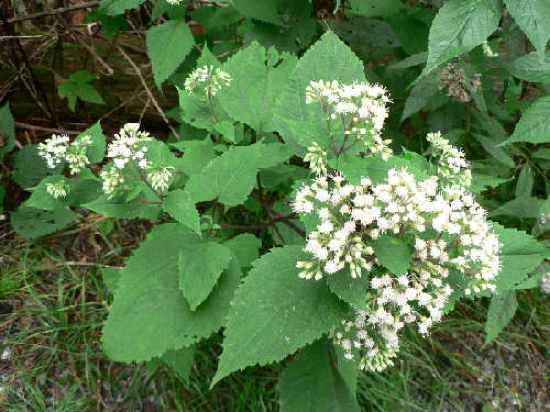
White snake root, also known as White Sanicle or Tall Boneset, is a highly poisonous plant, native to North America. Their flowers are white and, after blooming, small fluffy seeds blow away with the wind. This plant has a high % of the toxin tremetol, which is not known for killing humans directly, but indirectly. When the plant is eaten by cattle, the toxin is absorbed into their milk and meat. When humans then, in turn, eat the beef or drink the milk, the toxin enters the body and causes something called milk sickness, which is highly fatal. Thousands of ignorant European settlers died from milk sickness in America in the early 19th century. It is also believed that Abraham Lincoln’s mother, Nancy Hanks, died from milk sickness.

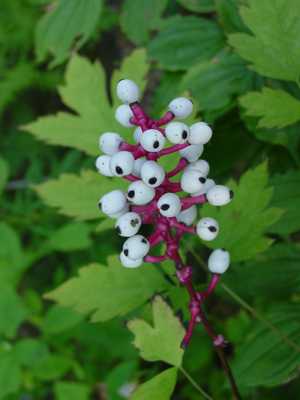
Doll’s eye, also known as White Baneberry, is a flowering plant native to Eastern and Northern North America. The Doll’s eyes comes from the striking fruit of the plant, which is a 1cm in diameter white berry with a black stigma scar, which looks very eye like. Although the whole plant has been declared toxic for human consumption, the most poisonous part is the concentrated toxins in the fruit, which have sadly claimed a number of children’s lives, as they also have a sweet taste. The berries contain a carcinogenic toxin, which has an almost immediate, sedative effect on human cardiac muscles and can easily cause a quick death.

Angel’s trumpets are flowering plants, native to the tropical regions of South America, but found around the world. The name Angel’s trumpet comes from the pendulous trumpet shaped flowers, covered in fine hairs, that hang from the tree. Flowers come in a variety of sizes (14-50cm) and in a variety of colors, including white, yellow, orange and pink. All parts of the plant contain toxins, such as tropane alkaloids scopolamine and atropine. The plant is sometimes turned into a tea and ingested as a hallucinogenic, recreational drug. As levels of toxicity varies prom plant to plant, and part to part, it is almost impossible to know how much toxins you have ingested. As a result of this, many users have overdosed and died from it.

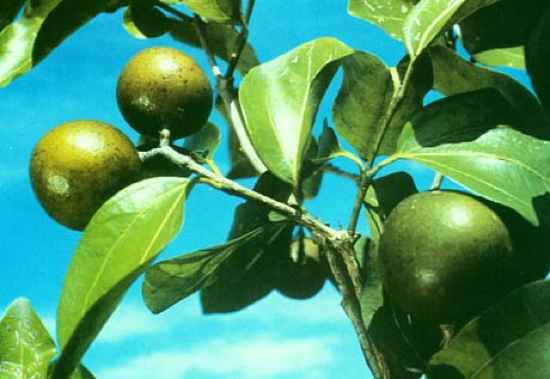
The Strychnine tree, better known as poison nut or Quaker Button, is a medium sized tree, native to India and South East Asia. The small seeds inside the trees’ green to orange fruit, is highly toxic, being filled with poisonous alkaloids’ Strychnine and Brucine. 30 mg of these toxins are enough to be fatal to an adult, and will lead to a painful death from violent convulsions due to simultaneous stimulation of sensory ganglia in the spine.

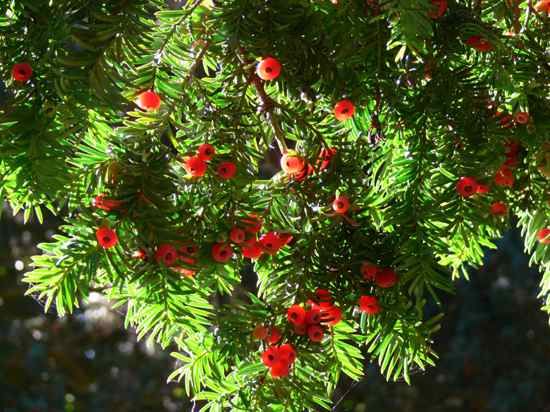
The English Yew is native to Europe, Northern Africa and South West Asia. It is a small to medium tree that has seeds enclosed in a soft, red, berry like armor. The berry armor is the only part of the fruit that is not poisonous and this allows birds to eat the fruit and spread the seeds without ill effect. It takes a dose of about 50g to be fatal to a human. Symptoms include difficulty breathing, muscle tremors, convulsion, collapse and finally cardiac arrest. In cases of severe poisoning, death can set in so fast that the other symptoms are missed.

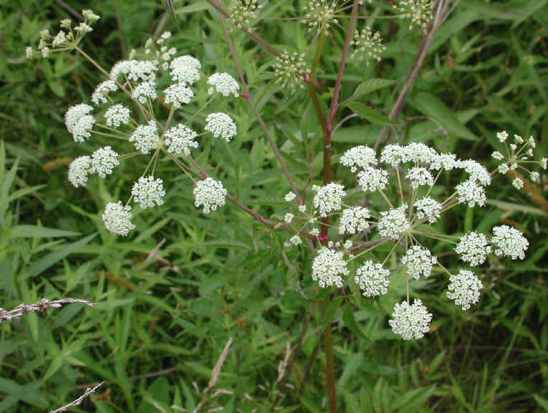
Water hemlock, or poison parsnip, is a group of highly poisonous plants that is native to the temperate regions of the northern hemisphere. The plants all have very distinctive small white or green flowers, arranged in an umbrella shape. Water hemlock is considered to be North America’s most poisonous plant as it is incredibly poisonous to humans. The plants contain a toxin named cicutoxin which causes seizures. This poison is found in all parts of the plant but is most concentrated in the roots, which is most potent in the spring. Besides the almost immediate seizures, other symptoms include nausea, vomiting, abdominal pains, tremors and confusion. Death is usually caused by respiratory failure or ventricular fibrillation and can occur just a few hours after ingestion.

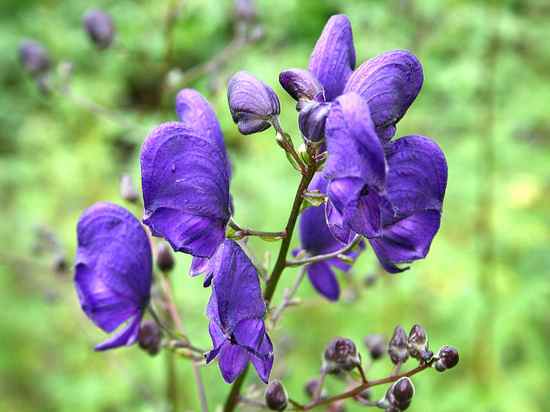
Wolfsbane, also known as leopard’s bane, woman’s bane or devils helmet, is a plant belonging to the buttercup family. These perennial plants are native to mountainous regions of the northern hemisphere. The plant contains very large quantities of a poison called alkaloid pseudaconitine, which used to be used by the Ainu people of Japan as poison for hunting, on the tips of their arrow heads. In cases of ingestion, symptoms, which include burning in the limbs and abdomen, sets in immediately. In cases of large doses, death can occur within 2-6 hours and 20ml is enough to kill an adult human.
Interestingly, Wolfsbane is also mentioned in mythology and werewolf lore as being able to either repel the werewolves/lycanthropes, or to induce the wolf state regardless of the moon phase. Hence the name.

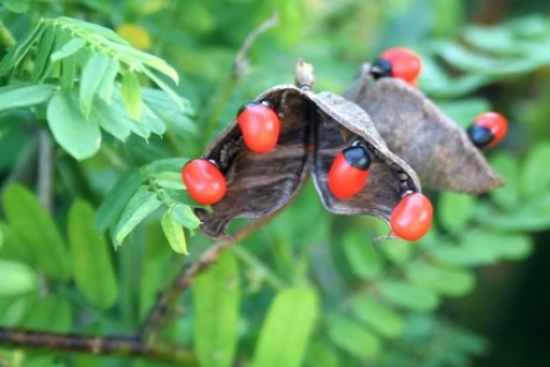
The Rosary Pea, also known as Crab’s eye or Jumbie bead, is a slender perennial climber that twines around trees, shrubs and hedges. The plant is native to Indonesia, but grows in most parts of the world. It is best known for its seeds, which are used as beads, and have a bright red to arrange color with a single black spot (not unlike an inverted black widow). The poison contained in the plant (abrin) is very similar to the poison ricin, found in some other poisonous plants. There is one main difference between these poisons, and that is that abrin is about 75 times stronger than ricin. This concludes that the lethal dose is much less, and in some cases as little as 3 micrograms can kill an adult human. Using seeds as beads even poses a huge threat, as people have been known to die, just from pricking their fingers on the drill bits used to drill the tiny holes in the seeds.

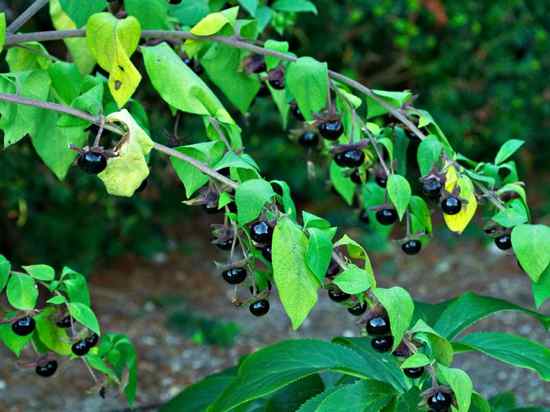
Belladonna, also known as Devils berries, death cherries or deadly nightshade, is native to Europe, North Africa and Western Asia. It is also one of the world’s most poisonous plants as it contains Tropane alkaloids, some of which cause delirium and hallucinations. Other symptoms of Belladonna poisoning include loss of voice, dry mouth, headaches, breathing difficulty and convulsions. The whole plant is poisonous, but berries usually play the greatest risk, as they are sweet and tend to attract children. 10 – 20 berries can kill an adult, but it only takes 1 leaf (in which the poisons are much more concentrated) to kill a full grown man.
Strangely, our very “intelligent” ancestors of the Elizabethan era (1500s) used Belladonna as part of their daily cosmetic routine. They used drops made from the plant as eye drops, to dilate their pupils, which was considered attractive and gave the user a dreamy look. Not being very knowledgeable at the time, the women also drank cyanide, or “bled” themselves to obtain a pale, translucent skin color, in addition to painting their faces white with a lead based paint called cerise.

Thinking back to the time your mother forced Castor oil down your throat, I bet you would never have guessed that it came from the most poisonous plant in the world (even if it did taste like it).
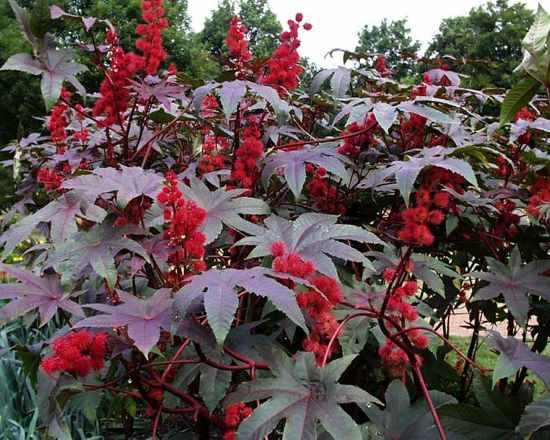
Castor plants are indigenous to the Mediterranean basin, eastern Africa and India, but are widely grown as an ornamental plant. A toxin called ricin is found throughout the plant, but is concentrated in the seeds/beans (which castor oil is made from). One raw seed is enough to kill a human in 2 days, which makes for a long, agonizing and unstoppable death. The first symptoms will be experienced within a few hours and will include a burning sensation in the throat & mouth, abdominal pain, bloody diarrhea and vomiting. The process is unstoppable and the final cause of death will be dehydration.
Strangely, humans are the most sensitive to these seeds, as it takes 1-4 to kill a full grown human, 11 to kill a dog and a whopping 80 seeds to kill a duck. The castor plant currently holds the Guinness World Record for most poisonous plant.


milad the ganagsta
f@#$% you all
Creepy! I’m staying away from plants today!
I’ve heard of Belladonna before…
You’re thinking of the actress.
So am I, now…
I like belladonna too….. The actress.
I really wouldn’t call her an ‘actress’. Her on-screen vocabulary consists only of the same few words and/or grunts. But at least she’s not poisoness.
And a fine job she does
That belladonna stuff looks like something I ate while in Montenegro. Based off the picture and the plant I ate it from I can now explain why I was sick half the time I was there. They didn’t taste that bad.
The reason you have heard of belladonna is that is is used to create a false death like in romeo and juliet thatwill wear off in right dosage
…cool list
I’ve only heard of one of these- wolfsbane… in harry potter
Haha. Glad I’m not the only one. I never knew what it was till just now.
Wow!
Poisons are used for hunting.
How does that work? Why doesn’t it make the meat poisonous?
..good question
The cooking process probably helps de-toxify the meat.
Some poisons are harmful when in the blood stream, yet may be destroyed during first pass digestion (stomach).
stomach digestion is actually the second stage…afte chewing with your teeth and saliva which breaks food down into more easily swallowed food
You’re right! In psychopharmacology, the stomach is referred to as “first pass”…semantics, i guess, because saliva doesn’t do much to toxins.
Interesting list, helpfull too with summer coming up and everybody going outdoors… But it would have been nice if the latin names of the plants were added. As I live in Belgium, the names get translated and I’m not that familiar with those. The English Yew for example is just calles Taxus around these parts.
Im sorry that I didn’t add them, On my last list there were comments that only botany students would understand the list because of the names. Here they are though, just for you =)
10# – Ageratina altissima
9# – Actaea pachypoda
8# – Brugmansia
7# – Strychnos nux-vomica
6# – Taxus baccata
5# – Cicuta
4# – Aconitum variegatum
3# – Abrus precatorius
2# – Atropa belladonna
1# – Ricinus communis
What you should’ve added to #1, was that the Castor plant was used as a form of punishment to those who opposed the facist regime of Italian dictator Mussolini. Though it’s a horrible punishment, I just thought it was an interesting fact
Nonetheless, this is a great list.
I’ve heard of Angel’s Trumpets, but where I live (San Diego, Ca) They’re known as “Hell’s Bells”. Some druggie from my school took 2 of this plant an almost died. He was in a coma for a week… The kicked. He still does em, and still does every other drug you can think of :/
It is also known as Datura.
Datura and Brugmansia do look similar – but they are different species. Don’t eat either, however, as both are toxic.
When I was younger around 8/10 they used to grow near my school. In the summer we would drink any rain or dew that collected inside them. I got a tad paranoid when I read how toxic they are, aha.
Interesting list, iv only heard of Belladonna before.
This list was quite interesting, though what does it say about me that I was slightly dissapointed that there are none of these plants in my backgarden?
Plants are interesting, as are the lists about them, I quite enjoy them.
There was a book I read, designed to teach kids about poisonous plants, in it a young boy is talking to the plants and the plants tell him tales of how people have used them and how it killed them. it was quite good, called the Poison Diaries by the Duchess of Northumberland
I don’t get it. Why make a list of toxic plants, mention ricin and not the coolest assassination ever. In 78, a bulgarian dissident, Georgi Markov was killed with an umbrella modified to act like a gun of some sort. Markov said he felt a sting in his thigh. When he looked back he saw a guy picking up his umbrella and running away. Markov died 3 days later and at the autopsy the doctors found a pellet 1.5 mm in diametre that contained traces of ricin inside. Now that is a powerful toxin and makes for a great story. I don’t understand why you chose not to write about it.
What was the plant called?!
The toxin was ricin so the source was castor plant. (I don’t think there is another source of ricin available). This whole thing shines a new light on BAJ
That’s pretty cool Arsnl, did they ever find out who killed him?
Well thank you very much for adding that, It is very interisting, and I am sorry for not adding it in =(
Ugh, enough with the fvcking plant lists… Listverse hasn’t had a good list in ages.
Then don’t read it. You save 5 minutes and we’re spared your useless comment, everybody’s a winner
Well said monie, well said..
Well said monie, well said…
Go fnck yourself, crackhead. Listverse has really gone down in appeal, I’m sure losers like you are to blame.
***** got a temper
Oddee posted a very, very similar list today as well:
http://www.oddee.com/item_97805.aspx
Coincidence or is one copying the other?
I doubt that Jamie stole this list. He knows people read sites similar to his own, such as Oddee. Something should be done to prevent this from occurring in the future, IMOP. Stange indeedy.
Even 4 or 5 of the entries are identical, so this can’t be coordinated in the least between Jamie and the other dude or dudette.
I cant believe you guys would think I stole the list!! Wel I didnt, it is just coincidence and my list is way better concideing in the oddee list, they basically say- “this whole plant is poisenous and will kill you if eaten” for everything on the list… Sad times, but I honestly knew nothing about it, and definately did not plan it.
Don’t get upset Christine. These sort of things happen when you write anything on the net. The internet has become so humongous that some similarities are bound to occur. Just a coincidence that came to someone’s notice because it was posted on another site which is popular as well.
I have done a few blogs of my own and has learned the hard way that never try to justify any personally vented criticism of the article or accusation of plagiarism as it will only fuel the issue.
In my humble opinion, I would request you to do the same if possible.
Happy writing!
you may not have stolen from him, but you sure did make did plagiarize from this article–http://webecoist.com/2008/09/16/16-most-unassuming-yet-lethal-killer-plants/
even talking about the same facts such as Abraham Lincoln’s mother dying from one of them.
No I did not!, Its Abraham Lincolns frikkin mother… I read that she died from milk sickness on atleast 5 sites while doing research for the list. Something like that is reasonably common (even Wiki has it) so you certainly cannot accuse me of plagerism because of that….
people dopn`t buy such crap he says those plants are ok i am now going to eat nb 7 i will come back and post a reply u`ll see
Bon appetit!
Please don’t kill yourself buddy. After someone says something is deadly poisonous it is best not to try to prove them wrong.
glad i won’t be hearing from you again hahaha just kidding.
we sell castor oil in our pharmacy and i had no idea it came from poisonous origins. amazing list Vrey
I remember picking up strychnine fruits and using them as bullets in slingshots when i was a kid. Thanks to my granny, I was warned of it as being poisonous and I never tried eating one. Now I’m 18, and I can still see the tree from my grandma’s window. There was a lot of flashbacka after reading this list, good job tho.
The Doll’s Eye plant doesn’t have carcinogenic toxins, they are cardiogenic toxins. Carcinogens cause cancer, cardiogenics weaken or damage the heart.
Easy mistake to make though, they sound similar
I would have included the tabaco plant, but good list
The castor seed if eaten whole witgout chewing will cause no harm.The toxin in the seeds is ricicin(Ricinus communis).It’s harmful only if chewed or taken as powder.I’ve tried it!
The Angel’s trumpet is known as datura in India.It’s also used in religious offerings to Lord Shiva.
I’m an intern in forensic science.The castor seed if eaten whole witgout chewing will cause no harm.The toxin in the seeds is ricicin(Ricinus communis).It’s harmful only if chewed or taken as powder.I’ve tried it!
The Angel’s trumpet is known as datura in India.It’s also used in religious offerings to Lord Shiva.
Sorry for the double comment as well as the spelling mistake.It was meant to be ricin not ricicin.Sorry again.it’s hard to type in a cellphone!
Ive come across 3 of these and Ive actually bit one, I tend to nibble on the stems plants but not swallow anything out of them. Nevee knew the danger of that. Thank you for the list as I have 1 of these in my backyard and nieces and nephews that very often play around them.
All sort of typos in my last comment. My bad
I’ve heard of most of these, but not all. Quite neat, actually. The Doll’s eyes one, is just creepy to look at. I can see the nightmares now of it turning and looking at me.
Interesting list.
Great ist
The Doll’s Eyes thing is just creepy.
No Mandrake?
Great list! In my highschool some of my class students made an angels trumpet tea to get high inside school! And they did and they all had to go to the hospital after! They got back to school like a week later! After that everyone in school could only take water to school nothing alse! I’ll try to get away from those plants and warn my family about the too!:)
Good list…one we might be well-off sending to all friends and family with young children.
Growing up in an era of relative safety, and placid parental rules and control, I certainly came across any number of poisonous plants and non-poisonous look-alikes during my daily adventures. I remember quite cheerfully eating any number of berries and flowers, not to mention knowing which ones had delicious sap one could suck from the flower’s stem. The only two plants I was warned about were the Castor plant and the berries of a type of Holly bush…a favorite berry grew on another bush, similar in appearance, differing only in the exact color of the berries. Somehow, I made it through childhood without untoward incident.
Still, with a young child it is better to be somewhat overcautious in allowing them to eat freely from plants either growing wild or in a neighbors garden.
Oddly, I have two healthy Angel Trumpet trees. Almost all other plants and trees in our yard (I use the term loosely), are attractive to the deer, and have to be protected by a surround of nasturtiums (deer will ignore anything else to eat the nasturtiums, but the Angel Trumpet is left completely alone…although there was a rabbit who nibbled at the bark for a while. She is no longer with us, victim to either the tree or one of the predators making a good living in the neighborhood.
Hey segues, Thanks for your comment and input. I always enjoy reading your comments, and you have such great stories to add, so thank you.
I’d say the deadliest Plant is Robert. Finding out he didn’t really write all those songs nearly killed me.
Listened to some White Snake the other day and my sympoms where the same ase item 1!! Horrible! Good thing I didn’t die!
“Symptoms”
It also affected my spelling!
“Were”
I told you!
#3 the Rosary Pea
“The poison contained in the plant (abrin) is very similar to the poison ricin, found in some other poisonous plants. There is one main difference between these poisons, and that is that abrin is about 75 times stronger than ricin.”
#1 Castor Plant
“…the most poisonous plant in the world (even if it did taste like it).
Castor plants are indigenous to the Mediterranean basin, eastern Africa and India, but are widely grown as an ornamental plant. A toxin called ricin is found throughout the plant”
Uhm.. Okay, I’m a little confused. If the toxin in number 3 is 75 times stronger than the toxin in number one, why is number one considered “the most poisonous plant in the world?”
Very cool list Christine, I was expecting Deadly Nightshade, Floxglove and Mistletoe; so to find the Top 10 were even more obscure (and dangerous) came as quite a surprise. Totally not expecting the Castor plant to be no.1, I guess Castor oil is somehow modified so that we can consume it?
Other (surprising?) notable additions: Hyacinth, Ivy, Ragwort, Delphinium, Daffodil, and Rhododendron – and lets not forget Potato and Rhubarb! Even Nutmeg!
Top list, thanks for posting.
Deadly night shade is actually another name for Bellabanna, So I didn’t forget it, should have given this alternate name though, my bad. As for foxglove, I would indead like to issue a warning to everyone. Foxglove is another highly toxic plant… So highly toxic in fact that just a deep inhaled wiff can kill you, so please google a immage, and stay AWAY.
I’m gonna eat these plants anyway…
How did the plants taste, Morton?
Morton?
MORTON????
il est Mort!
Great list and informative but I was in for a shock as when I was a child i ate one or two English yew berries. Fortunately I always spit the seeds therefore never had any symptoms… Oh dear :/ I never knew!!!!!
It’s strange how few plants people are truly aware of how deadly they are now-a-days. I have a 4 year old and she is incredibly curious about plants and flowers and I live in a region where a good 50% of this list is common.
I have made it my business to know.
This list may actually save someone’s life.
Unless there is a master-criminal reading…Then it might take someone’s.
Say how’s your liability insurance?
Ugh, Castor Oil, I took a spoonful of it once for a dare and felt nauseous the whole day.
Still not as poisonous as a regular brand Krusty-O though.
I’m surprised you didn’t mention oleander, one of the most poisonous plants in the world.
Oleander was on a previous listverse list, so I tried keeping it off mine, to avoid repeated information.
Interesting list. In front of the house where I grew up, there are still a couple of English yew shrubs, never knew what it was called, but I do recall being told NOT to eat the berries.
Despite the potential for harm in the castor plants, castor oil can be very beneficial. Any woman out there wanting better eyelashes just needs to go to the pharmacy for a bottle of castor oil and put a little on her lashes before bed. No need to go for all the expensive formulas out there made by the cometic companies.
I don’t recall the title of it, and I’m too lazy to look up which one it is but plants play a prominent role in one of Ian Fleming’s James Bond novels in which Bond infiltrates a secluded island densely populated with every sort of killer plant imaginable.
Great list, thanks!
Great list – pretty avid gardener here, right up my alley. I’ve grown Angel’s Trumpet (Gabriel’s Trumpet where I live) and Castor bean plants; good thing there’s no one I’ve needed to get out of the way. Water Hemlock looks suspiciously like Queen Anne’s Lace, I wonder if they’re related.
Again, good job Christine.
#5 we call queen anne’s lace where i come from.
unless it’s a different plant that looks quite similar
thanks for the dual survivor advice
Queen Anne’s Lace (Daucus carota) is a safe plant to eat – another common name is “Wild Carrot” and IS in fact related to the domestic carrot. Water Hemlock is superficially similar, but NOT the same plant. Always safest to check which plant you’re planning to eat – some look like poisonous cousins.
This is really similar to the newest list on oddee…
Noticed a bit of misinformation on the Castor plant’s toxicity.
http://en.wikipedia.org/wiki/Castor_oil_plant#Toxicity
Sorry about missinformation, I tend to try and avoid getting information from wiki for my lists, so I did not notice the indescrepancies. For castor plant I did reasearch at: http://waynesword.palomar.edu/plmar99.htm http://teendepressioncentral.yuku.com/topic/1606/POISONS–KILL—–100-natural-Ingredients-Updated http://forums.gardenweb.com/forums/load/foliage/m… http://chemistry.about.com/cs/toxicchemicals/a/aa040403a.htm and from Toxicity studies of castor oil, which can be found at: http://ntp.niehs.nih.gov/ntp/htdocs/ST_rpts/tox01…
No. 1 was a let down
Lets eat some plant!
Interesting list. Regarding #1, how do they know it takes 80 seeds to kill a duck? Please tell me this wasn’t through trial and error.
“How many seeds did you give this duck?”
“About 75. Is it dead yet?”
“No, not yet. Give him a few more….”
would like to see a picture of the fool that ate the four seeds. lol
i opened this list so that when i got up to go get some food, i could read it when i got back. and then i read the intro, and never got up and just read the list. that’s right, this list was more important to me than food.
also, # 6 on the list grew out front of my first house. my mom always told me it was poisonous, and i used to joke with her about eating the berries. one day i did and it tasted horrible. but i was that close to possibly dying. i thought that was worth mentioning.
My grandmother grows Angel’s trumpets. I really want to try them now
Castor poisoning is NOT unstoppable…
Are these lists even researched? Or just picked and then wiki background information is pasted in?
I am presently taking Donnatal ( it says belladonna/phenobarbital on pill bottle) for my gallbladder spasms. Kinda freaked me out when I first saw the prescription bottle because I had always heard it was poisonous. It works well, I must say.
Death caused by ricin from castor seeds is not unstoppable, it is treatable. One seed’s worth will probably not kill an adult, four is closer. Also, the seed must be broken or chewed. Simply eating the fruit without breaking the seed will not release most of the toxin, although it will still make you sick.
I was hoping to see White Oleander on this list. Otherwise, another great list! I used to warn my friends not to eat those Doll’s Eye berries….I told them they were poisonous, though I was not positive they were. Now I know, and I will from here on out consider myself a hero!
I have always suspected that ducks were badass…
Name
cool but kinda scary
beladonna isn’t deadly i’ve eaten it and survived.
Thank you for some other magnificent article. Where else may anybody get that type of information in such a perfect method of writing? I’ve a presentation next week, and I am at the look for such information.