A feral child is a human child who has lived away from human contact from a very young age, and has little or no experience of human care, loving or social behavior, and, crucially, of human language. Feral children are confined by humans (often parents), brought up by animals, or live in the wild in isolation. There have been over one hundred reported cases of feral children, and this is a selection of ten of them.
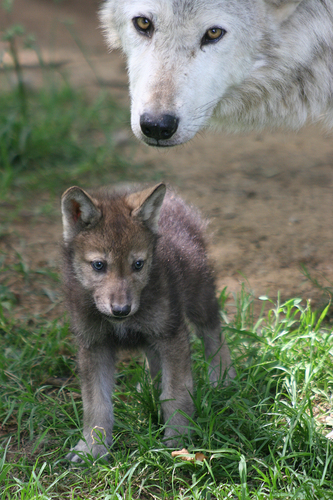
In May 1972, a boy aged about four was discovered in the forest of Musafirkhana, about 20 miles from Sultanpur. The boy was playing with wolf cubs. He had very dark skin, long hooked fingernails, matted hair and calluses on his palms, elbows and knees. He shared several characteristics with Kamala and Amala: sharpened teeth, craving for blood, earth-eating, chicken-hunting, love of darkness and friendship with dogs and jackals. He was named Shamdeo and taken to the village of Narayanpur. Although weaned off raw meat, he never talked, but learnt some sign language. In 1978 he was admitted to Mother Theresa’s Home for the Destitute and Dying in Lucknow, where he was re-named Pascal and was visited by Bruce Chatwin in 1978. He died in February 1985.
The wild girl of Champagne had probably learned to speak before her abandonment, for she is a rare example of a wild child learning to talk coherently. Her diet consisted of birds, frogs and fish, leaves, branches and roots. Given a rabbit, she immediately skinned and devoured it. “Her fingers and in particular her thumbs, were extraordinarily large,” according to a contemporary witness, the famous scientist Charles Marie de la Condamine. She is said to have used her thumbs to dig out roots and swing from tree to tree like a monkey. She was a very fast runner and had phenomenally sharp eyesight. When the Queen of Poland, the mother of the French queen, passed through Champagne in 1737 to take possession of the Duchy of Lorraine, she heard about the girl and took her hunting, where she outran and killed rabbits.

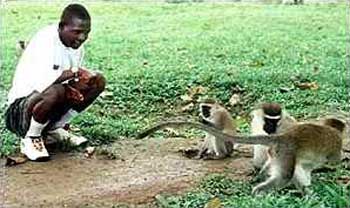
One day in 1991, a Ugandan villager called Milly Sebba went further than usual in search of firewood and came upon a little boy with a pack of monkeys. She summoned help and the boy was cornered up a tree. He was brought back to Milly’s village. His knees were almost white from walking on them. His nails were very long and curled round and he wasn’t house-trained. A villager identified the boy as John Sesebunya, last seen in 1988 at the age of two or three when his father murdered his mother and disappeared. For the next three years or so, he lived wild. He vaguely remembers monkeys coming up to him, after a few days, and offering him roots and nuts, sweet potatoes and kasava. The five monkeys, two of them young, were wary at first, but befriended him within about two weeks and taught him, he says, to travel with them, to search for food and to climb trees. He is now about 21 years old, and in October 1999 went to Britain as part of the 20-strong Pearl of Africa Children’s Choir.
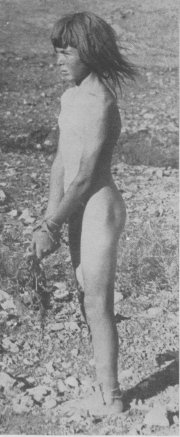
Jean-Claude Auger, an anthropologist from the Basque country, was traveling alone across the Spanish Sahara (Rio de Oro) in 1960 when he met some Nemadi nomads, who told him about a wild child a day’s journey away. The next day, he followed the nomads’ directions. On the horizon he saw a naked child “galloping in gigantic bounds among a long cavalcade of white gazelles”. The boy walked on all fours, but occasionally assumed an upright gait, suggesting to Auger that he was abandoned or lost at about seven or eight months, having already learnt to stand. He habitually twitched his muscles, scalp, nose and ears, much like the rest of the herd, in response to the slightest noise. He would eat desert roots with his teeth, pucking his nostrils like the gazelles. He appeared to be herbivorous apart from the occasional agama lizard or worm when plant life was lacking. His teeth edges were level like those of a herbivorous animal. In 1966 an unsuccessful attempt was made to catch the boy in a net suspended from a helicopter; unlike most of the feral children of whom we have records, the gazelle boy was never removed from his wild companions.
Oxana Malaya (Оксана Малая) (born November 1983) was found as an 8-year-old feral child in Ukraine in 1991, having lived most of her life in the company of dogs. She picked up a number of dog-like habits and found it difficult to master language. Oxana’s alcoholic parents were unable to care for her. They lived in an impoverished area where there were wild dogs roaming the streets. She lived in a dog kennel behind her house where she was cared for by dogs and learned their behaviours and mannerisms. She growled, barked and crouched like a wild dog, sniffed at her food before she ate it, and was found to have acquired extremely acute senses of hearing, smell, and sight.
The most recent case of Mowgli Syndrome was that of a seven-year-old boy who was rescued by Russian healthcare workers after being discovered living in a two-bedroom apartment with his mother and an abundance of feathered friends. It would appear the small apartment doubled as an aviary with cages filled with dozens of birds. In an interview, one of his rescuers, Social Worker Galina Volskaya, said that his mother treated him like another pet. While he was never physically harmed by his mother, she simply never spoke to him. It was the birds who communicated with the boy
“He just chirps and when realising that he is not understood, starts to wave hands in the way birds winnow wings.” Quote from Social Worker, Galina Volskaya.
A leopard-child was reported by EC Stuart Baker in the Journal of the Bombay Natural History Society (July 1920). The boy was stolen from his parents by a leopardess in the North Cachar Hills near Assam in about 1912, and three years later recovered and identified. “At the time the child ran on all fours almost as fast as an adult man could run, whilst in dodging in and out of bushes and other obstacles he was much cleverer and quicker. His knees had hard callosities on them and his toes were retained upright almost at right angles to his instep. The palms of his hands and pads of his toes and thumbs were also covered with very tough horny skin. When first caught, he bit and fought with everyone and any wretched village fowl which came within his reach was seized, torn to pieces and eaten with extraordinary rapidity.”
The most famous wolf-children are the two girls captured in October 1920 from a huge abandoned ant-hill squatted by wolves near Godamuri in the vicinity of Midnapore, west of Calcutta, by villagers under the direction of the Rev JAL Singh, an Anglican missionary. The mother wolf was shot. The girls were named Kamala and Amala, and were thought to be aged about eight and two. According to Singh, the girls had misshapen jaws, elongated canines, and eyes that shone in the dark with the peculiar blue glare of cats and dogs. Amala died the following year, but Kamala survived until 1929, by which time she had given up eating carrion, had learned to walk upright and spoke about 50 words.
In 1937 George Maranz described a visit to a Turkish lunatic asylum in Bursa, Turkey, where he met a girl who had allegedly lived with bears for many years. Hunters in a mountainous forest near Adana had shot a she-bear and then been attacked by a powerful little “wood spirit”. Finally overcome, this turned out to be a human child, though utterly bear-like in her voice, habits and physique. She refused all cooked food and slept on a mattress in a dark corner of her room. Investigations showed that a two-year-old child had disappeared from a nearby village 14 years earlier, and it was presumed that a bear had adopted her.
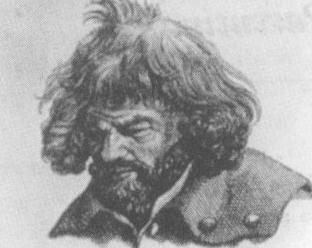
The first really famous feral child was Wild Peter, “a naked, brownish, black-haired creature” captured near Helpensen in Hanover in 1724, when he was about 12. He climbed trees with ease, lived off plants and seemed incapable of speech. He refused bread, preferring to strip the bark from green twigs and suck on the sap; but he eventually learnt to eat fruit and vegetables. He was presented at court in Hanover to George I, and taken to England, where he was studied by leading men of letters. He spent 68 years in society, but never learnt to say anything except “Peter” and “King George”, although his hearing and sense of smell were said to be “particularly acute”.
You can read more about feral children here.
This article is licensed under the GFDL because it contains quotations from the Wikipedia article: Oxana Malaya.


Wow, great list. The feral child subject has always been very interesting to me. I remember a case similar to the bird boy, here in the US. I think the girl's name was Genie and she was basically kept in a room chained to a potty chair until the age of 13. If I remember correctly, her mother eventually regained custody of her. The American justice system at work!
hah….the TOI ctnemmos ARE good
I notice a lot of em r ppl not actually livin in India
Been a regular reader of ur blog some time n i was wonderin when u wud comment bout that TOI article after u made the front page
(at least here in blore)
I hate to be the party pooper here, but science has *never* substantiated or supported a true case of children being raised by wild animals or even really living with them. There are countless *stories* about such things, but the evidence never bears them out. It's often later shown (or at least theorized) that these were children suffering from autism and/or some kind of severe emotional/physical abuse who were abandoned by their families (this happens most often in India, hence most of the stories come from there, where the Indians also have a strong tradition of myth and belief associated with feral children) and, if they managed to survive for a time, were later observed seeming to live amongst wild animals, whereas in fact this was not really the case.
Human children are completely helpless at birth and remain so for the longest time of any mammal. It is near impossible to believe that a human infant left in the wild could survive even *with* the help of wild animals—to begin with, predators would view the infant as food, not a foster child—and the time it would take for a human infant to grow into a "member of a pack" would peg them as an outcast and weakling to be discarded.
These stories just never ring true. We *want* to believe that such things could happen, but the fact is, humans are just far too dependent on socialization and on intense parental care (far in excess of what other mammals do) to make it in a wild situation, if we're thrust into it as children.
actually I am currently in sociology and Sociologists have actually studied cases where children have been abandoned by their parents and animals have taken them in. Yes there are fables on the topic but that’s because it scares people and hell, we love that. Also, I doubt most of this is true. But you don’t need to try and pone when you can’t even do your research.
I was rllaey happy to find your post Ways To Redecorate Kids Rooms? | Home Interiors Info.
Oh – here she is BEHAVING like a dog, on youtube:
http://www.youtube.com/watch?v=qyqbnDjId7g
i know i was just wonedring that yesterday…….and i try not to think of it because it confuses me…also that stuff that we come from monkeys…u know ….and who came first dinosaurs or people…did we really come from eithiopia??the more i think of it the more it confuses me u know what i just wont think at all…
Wow I did not realize that there were so many modern cases of this. These are very interesting.
Mike see the comment rules right before you hit submit to post your comment.
what an intriguing list!
LOL ok edit that last part of that post. J must be on the enforcing of the rules.
Is it ok to say that is the first time I was actually online at the right time to be the *first Comment* asterisks just\ because there was technically a first comment but it was just that.
One of those FIRSTS!!
J must have been right on with showing people he means business about the new commenting rules.
Wow, these kids are something else. I would imagine that in many cases they are more dangerous than you would think.
This could bring up very intriguing discussions on nature vs. nurture
Very fascinating list.But please make the font of the comments a little larger,this small size really hurts my eyes!!
Very interesting list I feel for the bird boy as his mother was there but didn’t pay him any attention, maybe she didn’t know how??
I must say that I enjoyed the list–however, two things: 1. cases from the 1700′s are hardly “modern” cases. And 2. A pair of the most infamous feral children of all, who were well known for the ground breaking studies into child development, are strangely not listed. I was waiting for their names to be 1 & 2 and was completely surprised when I did not see their names at all. “Genie”, as she was named. Locked in a room tied to a child’s potty found unable to speak and completely unsocialized. http://www.feralchildren.com/en/showchild.php?ch=genie
(I’m including this as it was a famously studied case, possibly the most, though by my own standard, not modern)
Victor the wild boy of Aveyron. http://www.feralchildren.com/en/showchild.php?ch=victor
This site is a great resource for feral children cases-including up to date to 2007.
Fascinating. #7 is particularly interesting, since they never successfully removed him from his “natural” environment…
I find these stories very sad, however. My son is two, so I reckon everything I read about the circumstances of other children goes through the filter of how I view him.
The wolf-girls are intruguing- their eyes really shone in the dark, like cats? Crazy.
I don’t know if these is real, but it is said that the founders of Rome, Romulus and Remus, were raised by wolves.
Wow most of these seem amazing at first glance and probably some of these may be true but the leoparb boy to me seems to be more of a story than real.
Satori:
In sociology/biology/anthropology, the 1700s *are,* in fact, considered “modern.” 1700 is pretty much the dividing line–at least as far as archeology is concerned. Anything after that=modern. Anything before that…. well, whatever you want to call it. Some disciplines take “modern” back as far as 1500.
Randall: I absolutely agree with you.A boy with “tough horny skin on his feet…” and the leopardess adopted him.common,gimme a break.
Brilliant list. It’s really interesting to read about these type of people. It’d be amazing if some of the feral kids could learn to speak a human language, so they could maybe tell us what the different noises the animals make mean.
I guess Ive heard of the idea of feral children, but didnt actually think there were any. are these actually documented and true? because im wondering if its anatomically possible to develop such pronounced animal traits, esp. the physical ones like elongated teeth, upright toes, horny skin, etc. in a short period of time?
Wow, this is so interesting.
Just FYI, there’s a typo in #8 – John Ssebunya’s name is spelled John Sesebunya.
RANDALL- I am aware of the “modern era” time lines, I just don’t agree with them! Lol…I just meant that they shouldn’t be classified as modern purely because of a time period designation rather by a measure of it’s modernity in case studies, discovery etc. I was hoping for the 20th and 21rst Century findings more so…as these would be less urban legend, and better documented (by way of photos, actual study etc.)…so perhaps I should have been clearer in my statement.
You are particular! Lol
Do you correct people’s poor grammar and spelling as well? Can’t get away with anything when you’re around!
By modern I was referring to the post-medieval period – the so-called enlightenment and onwards.
Satori:
HEY. I’m just SAYIN’….
no, I’m not a grammar prude… unless I’m annoyed by someone’s stupidity. But generally then I just turn violent.
islanderbst: upturned toes is entirely possible – consider a child that never learns to walk flat on its feet – its toes would, over time, bend up due to it running on the ball of its feet and palms – if this occurs as a young age the bones would develop in that way – effectively the same idea as the foot binding in Chinese culture.
islanderbst: here is a quote for you:
From the Daily Telegraph: http://www.telegraph.co.uk/arts/main.jhtml?xml=/arts/2006/07/17/ftdog17.xml
That is pretty good evidence for at least one of these feral children – she lived with animals and had their attributes as a result.
yeah there was a feral on oprah a couple years ago, if i remember correctly, it was oxana
oh ok, i guess im still a doubter
btw, this list made me remember a joke by some british comic (Jimmy soemthing?) who said:
“you always hear about the boy who was raised by wolves, but you never hear about the boy who was raised by the boy who was raised by wolves”
which had made me laugh, but none of these examples sure were able to raise a kid
Sorry I know this is off toic but did you change the look of the site again? It looks good
I believe that a two year old could find some way to survive in the wilderness, but not a seven month old baby. The baby would suffer from failure to thrive. Failure to thrive occurs when a child is not given the proper foods and recives a lack of stimulation. It’s just not possible for a human infant to survive on it’s own.
jfrater: How come you left out Genie?? She was one of the most well documented cases. American psychiatrists and psychologists studied her and learned a lot about how we must learn certain things, like language, at the right age or we almost can’t. She was a great great contributor to developmental psychology. I was really surprised she wasn’t on here.
riley: I picked 10 that I thought were interesting and different – this is not a “top” 10 list – just a “10″ list
fishing4monkeys: yep – centered it and put grey at the sides, and added images for the section titles on the right panel
The occurrence of feral children is highly possible, Randall, I’ve seen documentaries specifically on Oxana and Genie (which Satori mentioned) that include video. I can’t remember if they ever got Oxana to communicate. They possibly taught her various words and phrases, but after a certain period (a very short and specific time) it is impossible for a child that has had very little human contact to learn to communicate. In Genie’s case they were able to teach her a very large vocabulary but she was never able to put the words into thoughts or phrases.
Actually, #1 isn’t the first mention of a feral child,
in Ibn Tufail’s philosophical novel Hayy ibn Yaqdhan.
A really great work that infeluenced inflenced many Middle Eastern and European thinkers and authers.
It was written in the early 12th century and was translated into Latin and English in 1671 and 1708 respectively.
toolnut: Oxana has been able to develop normal speech now.
toolnut:
Sorry, but this proves nothing. As I pointed out, these cases invariably end up being examples of children who were abused/neglected/abandoned, and/or suffered from autism or other afflictions. In regards to so-called feral children, no one has ever proved that it is possible for children acting thusly to have been the result of living with animals or being raised by animals.
Yes, it’s very difficult or impossible for a child who has had little or no socialization with humans to learn how to communicate—but that does NOT prove such children were raised by or tended by animals.
i have seen a video in school before and this girl oneo of the ones on the list one in an orage shirt and as
cts like a dog this girl she barks exactly like a dog and she can run rally fanst on all fours its creepy
The John Sesebunya story has been highly criticized. From what I can remember the person who took him in apparently ran an orphanage that was struggling for funds. What better way to bring in funds than to create this fantastic story about a boy being rescued from animals and taught human skills? A total Tarzan story. Most of these stories can be debunct in some way. I really have a hard time believing the Gazelle boy story for example. While children being rescued by monkeys, dogs, etc can have a certain element of believability mainly because they exhibit behaviors and speeds that a human could potentially adapt to. Living with a Gazelle family on the other hand is highly unlikely. Since their main fight or flight response is to use their speed to get away from predators, the story of a human living with them would be rather short, let alone a child. The headline would read “gazelle boy killed by lion when he couldn’t keep up with the herd”
Best list for a long time, more like this PLEASE!
Thanks and keep up the good work.
To assume that a human being could grow elongated teeth from being raised in “the wild” means that one could also assume that a domesticated dog that lives in a humans home, would not grow canine teeth, as there would be no need for them.
Size, shape, type and number of teeth are genetically based per species.
Maybe raised by animals is misnomer, raised with little or no human contact may be more realistic. Combine any underlying defect/deficiency/disorder with isolation and Feral children would be the result. But don’t take my word for it, I could be wrong. We’ll check with Randall. RANDALL…yoo hoo
I find it fascinating that the headings above can be combined into a fascinating spam subject line:
Shamdeo Wild Girl of Champagne Wild Peter Cia1lis for free?!
Mom:
RANDALL has already spoken. See above.
Now bring me the broomstick of the Wicked Witch of the West, and I shall consider granting your wishes.
even with the key of autism and so on does this not show a strong push towards how a child is brought up in regards to Nature vs. nurture
Though I was not, in fact raised by wolves (though my mother sometimes asked me if I was), i sare several characteristics with Shamdeo : sharpened teeth, craving for blood, earth-eating, chicken-hunting, love of darkness and friendship with dogs and jackals.
OK, not the sharpened teeth part… or the earth-eating, but I’m totally down with the rest.
jamie: Ya gotta get a spell checker for the comments
Why is number seven referred to as Syrian? Western Sahara is thousands of miles away from Syria; they are on different continents.
-JAK
Jamie,
I am new to commenting and i agree that a spell checker would be good. I know that my spelling is not always the best but, good god ya’ll
I ugree, uh spill chucker wood be gud!
doesnt your comment text box underline your misspelled words? mine does
Wow, I have heard of feral cats, dogs, but kids? Why did the parents ever do such a thing: #5. Has this ever been done to twins: nature vs. nurture?
StormyGirl: That would be interesting to know the results of such an experiment, however it would be way too immoral to actually perform such an experiment intentionally
How come Tarzan didn’t make the list?
Seriously though, are these all exaggerated cases or urban myths as Randall suggests?
Immorality it all about perseption. Not that I agree with the man but Hitler did alot of studies about children that suffered with falure to thrive and with the (at the time) “idea” of feral children
I’ve been accused of being “born in a barn”… does that count?? lol
nature v. nurture: i bet you could try it with the Olsen Twins and no one would mind
islanderbst,
LOL, I agree!
I watched the you tube video about Oxana Malaya and at the very end it says Oxana is now living in a home for the handicapped in Ukraine.
Here is how warped my sense of humor is: I was thinking what if at the end they said today Oxana is herding sheep in New Zealand.
Never underestimate nature. There are documented cases of animals “adopting” offspring from another species. National Geographic documented a recent case where a lioness was filmed caring for a baby antelope. Maternal instinct can be a very powerful driving force!
Let me reiterate, particularly in light of otay’s comment:
Human beings–and human infants/children–are NOT like other species. Regardless of our “artificial” social connections and skills (i.e., the ones we build around us later in life, as opposed to those which are “instinctual”–if such a word can be used in this regard–in us) the fact remains that BIOLOGICALLY, human infants are UTTERLY helpless for a longer period of time than ANY other mammal. It is quite simply impossible for a human baby to survive in the wild for any length of time, without adult human intervention.
To begin with, while it’s true there’s the occasional bizarre example of a predator “adopting” a prey infant, thus proving the power of the maternal instinct—this is by no means a common occurrence. Moreover, again—there’s a big difference between a baby antelope and a baby human. What wild animal *could* put up with a foster baby that can’t even get up and walk on its own for nearly a year, and that certainly can’t even forage for food for *at least* that long? That’s the case with human infants.
A human child–perhaps a toddler, we’ll say, beyond suckling age–would spark little maternal instinct in another mammal. But if you go beyond that age only a little, you’re talking about a human child who HAS already begun to be “humanized” and “socialized,” assuming they’ve been reared in a normal fashion amongst humans. We have many stories of human children lost in the wilderness–and sadly, they either die, or, if lucky, eventually find their way back to human settlements. (Or are found by other humans).
The feral child stories are just that–stories. Behind them are harsher, even tragic realities.
gosh know-it-alls get pretty annoying. just sayin.
kayla:
/agree
Randall #12:
I agree that children abandoned or isolated in the wild may be considered prey by wild animals, and that it may be considered impossible for a child to survive on its own even with the help of wild animals.
But aren’t there almost always exceptions to every case? Isn’t it possible that on a rare occasion a child could in fact survive in the wild with the aide of wild animals. Maybe 1000 children would die from starvation or be eaten, but for every 1000 maybe one would be accepted and ‘adopted’ by an animals.
While I can’t see the child developing elongated canines or eyes that glow in the dark like cats or dogs. The formation of rough, callused skin caused by climbing trees, running/walking on the terrain in the forest without shoes makes sense.
I know that you brought up the point that in alot of these cases the children were often found suffering from autism and/or some emotional/physical abuse and abandoned. But does that mean they could not have recieved some assistance from animals or lived among them? You mentioned that science has never substantiated a case of a child raised by and/or living with wild animals, but where is the proof that they were not? If the children were later found ‘seeming’ to live among animals, how do they know that wasn’t really the case? Was anyone with the children for the time they were missing? No. Did anyone observe what happened to the children from the moment they were abandoned to when they were found? No.
You say that humans are far to dependent on socialization and parental care to make it in the wild if thrust into that situation as a child. But desperate times call for desperate measures. I don’t dismiss the chance of a child surviving in the wild. Humans are born with all different types of character traits. While one child may lay in the wild and die without a fight, another may have determination and the instinct to fight for survival bred into them.
You apologized for being a “party pooper”, but you weren’t a ‘party pooper’ in my eyes.
lol
If none of us were there to observe the children while they were missing, then none of us know if they were or weren’t raised by animals. To me, anything is possible until there is evidence to prove otherwise…even children raised by animals.
Actually, I should quality these statements I’ve been making.
I should not say that all these stories of feral children are IMPOSSIBLE. I’m usually the one to say “never say never.” But what I mean to point out here is how UNLIKELY they are, and that there are more reasonable explanations.
I just want to play down the plausibility of this thing.
The pictures of the actual animals are cute. Good List!
zeppelingod:
You raise a couple good points, but one quick thing I need to refute: One doesn’t prove a negative. Scientists don’t have to prove that feral children *weren’t* raised by animals. It has to be proven that they *were.* It’s the extraordinary claim that requires extraordinary evidence. Occam’s razor would say that there’s probably a more reasonable explanation to a feral child than that they were raised by an animal–namely, the explanations I’ve cited.
As for your statement about some children giving up, others fighting for survival—sure. But infants can’t do this. An infant is an infant. Can’t change what we are. Human infants are helpless for at least several months.
I should point out that it was Bruno Bettelheim, the great child psychologist, who postulated the idea of autism in feral children–but this has its downside–an autistic child might roam into the wild (or be left there) for a time and later be found (by others) and *assumed* to have been “out there” for a long time… but most experts on autism doubt highly that an autistic child could survive alone in the wild for long.
Many scientists who examined so-called feral children have also posited that some of these children were in fact retarded, and again either wandered off or were discarded, and managed to eke out an existence in the wild for a time—in other words, they went “out there” at an old enough age to be physically capable of living in the wild without assistance—but being retarded were capable of little else, especially if they had been denied human socialization.
Still, you’re right—as I said in my previous post, I shouldn’t say it’s impossible. Just very unlikely.